Do I Need a Dual Steering Stabilizer on My Jeep Wrangler?
If you have ever upgraded your Jeep Wrangler with larger tires or a lift kit, you have probably heard about dual steering stabilizers. They look great, sound impressive, and are often advertised as a must-have upgrade for off-road performance. But do you really need one? Let’s take a closer look at what a dual steering stabilizer does and whether it is the right choice for your Jeep Wrangler.
What Is a Dual Steering Stabilizer?
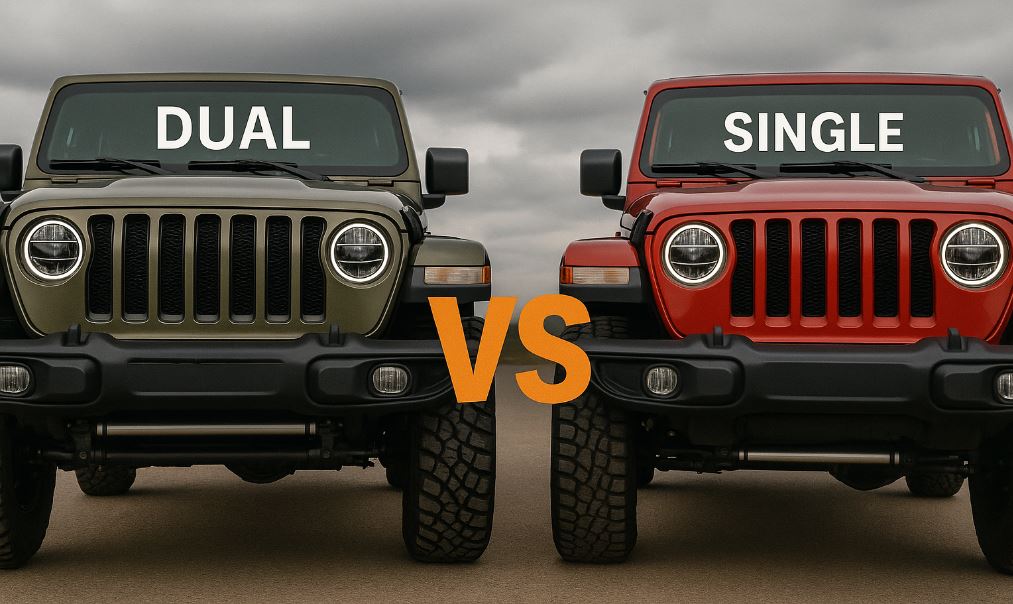
A dual steering stabilizer setup uses two dampers instead of one. Each shock absorber mounts horizontally across the steering linkage to control side-to-side motion and reduce feedback from the road or trail. The goal is to provide extra damping power for vehicles that experience strong steering forces, such as lifted Jeeps or those with oversized tires.
On a stock Jeep Wrangler, a single stabilizer is usually enough to handle factory tire sizes and suspension geometry. However, as you increase tire diameter or alter the suspension, the forces acting on the steering system grow significantly. That is when a dual stabilizer can become useful.
Benefits of a Dual Steering Stabilizer
- Improved steering control: Two stabilizers share the workload, providing smoother handling and less steering kickback on rough terrain.
- Reduced steering vibration: Dual setups help minimize road shock and bump steer, especially with 35-inch or larger tires.
- Less wear on components: The extra damping helps reduce stress on tie rods, drag links, and other steering parts.
- Better off-road performance: Dual stabilizers help absorb impacts from rocks, ruts, and uneven terrain, giving you more precise steering feedback.
- Aggressive appearance: Many Jeep owners install dual systems for the rugged, balanced look they add to the front end.
When a Dual Steering Stabilizer Is Worth It
You might benefit from a dual stabilizer if your Jeep Wrangler meets one or more of the following conditions:
- You have 35-inch or larger tires.
- Your Jeep is lifted more than 3 inches.
- You frequently off-road on rocky or uneven trails.
- You tow heavy loads or have extra front-end weight, such as a winch or steel bumper.
- You notice excessive steering wobble or bump steer even with all components in good condition.
In these scenarios, a dual steering stabilizer can make your Wrangler feel more stable and predictable, especially at highway speeds or during aggressive off-road driving.
When You Do Not Need a Dual Stabilizer
If your Jeep is close to stock height and you run standard-size tires, a single high-quality stabilizer will perform just as well. A dual setup will not fix underlying mechanical problems like worn ball joints, loose tie rods, or poor alignment. In fact, relying on extra stabilizers to mask vibration can make it harder to identify and fix real steering issues.
- Stock or near-stock Wranglers do not require dual stabilizers.
- Light off-roaders are better off investing in quality shocks and proper alignment first.
- Old or failing parts should be replaced before considering steering upgrades.
Choosing the Right Steering Stabilizer for Your Jeep
If you decide a dual setup fits your build, make sure to choose a system that matches your suspension geometry and tire size. Reputable brands like Fox, Bilstein, Rough Country, and Rancho offer kits specifically designed for Jeep Wrangler JK, JL, and Gladiator models.
- Pick stabilizers rated for your lift height and tire weight.
- Ensure proper mounting brackets to avoid clearance issues.
- Regularly inspect for leaks, dents, or loose hardware after off-road trips.
Final Thoughts
A dual steering stabilizer can be a valuable upgrade for Jeep Wrangler owners running large tires, heavy accessories, or who regularly drive off-road. It provides better control, smoother handling, and helps protect steering components from excessive wear. However, for daily drivers or lightly modified Wranglers, a single quality stabilizer is usually all you need.
Before upgrading, always check your alignment, ball joints, and suspension components. A steering stabilizer enhances performance, but it should never be used to cover up mechanical problems. Choose the right setup for your build, and your Jeep Wrangler will stay stable and responsive on every trail and highway.