Jeep Wrangler Bump Steer: Why Bigger Tires Cause It and How to Fix It
Upgrading your Jeep Wrangler with larger, more aggressive off-road tires can completely transform its appearance and performance. Bigger tires improve ground clearance and traction on rocky trails, mud, and uneven terrain.
However, oversized tires can also introduce new steering problems. One of the most common issues Jeep Wrangler owners face after upgrading to larger tires is bump steer.
What Is Bump Steer?
Bump steer occurs when your Jeep’s front wheels change direction without any input from the steering wheel.
Imagine this: you hit a pothole or a bump, and your Wrangler suddenly pulls to one side. You’re forced to correct the steering—even though your hands were steady on the wheel.
This happens because of changes in suspension and steering geometry as the axle moves up and down. In a Jeep Wrangler, with its solid front axle design, bump steer can become more noticeable when geometry is altered.
Why Bigger Tires Can Cause Bump Steer
When you install larger tires on your Jeep Wrangler, you increase both the weight and rotational mass on your steering components.
This extra weight can lead to bump steer by:
- Magnifying existing wear in tie rod ends, drag links, and ball joints
- Changing steering angles if your suspension isn’t adjusted after the upgrade
- Amplifying the impact of bumps and ruts, sending stronger feedback through the steering system
If your Jeep already had minor steering or suspension play, larger tires will make those issues far more noticeable.
How a Steering Stabilizer Helps
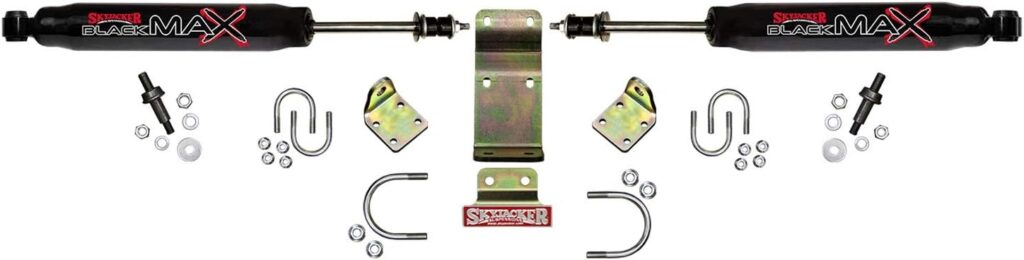
A steering stabilizer works like a shock absorber for your steering system. When larger tires on a Jeep Wrangler hit a bump, the stabilizer absorbs part of the energy before it reaches your hands.
A steering stabilizer improves your Jeep by:
- Reducing sudden jerks in the steering wheel
- Improving overall stability and control
- Making highway driving more comfortable after an off-road tire upgrade
Keep in mind: a steering stabilizer helps manage symptoms, but it’s not a replacement for proper alignment and healthy suspension components.
The Right Approach After a Tire Upgrade
- Inspect all steering and suspension components before and after installing larger tires.
- Get a proper alignment to correct geometry changes.
- Replace worn parts like tie rod ends, drag link ends, and ball joints.
- Install a quality steering stabilizer to reduce bump steer.
- Regularly check torque specs to keep everything tight and secure.
Bottom Line: Bigger Tires and Bump Steer
Upgrading to larger tires gives your Jeep Wrangler a tougher look and greater off-road capability, but it can also expose weaknesses in your steering system. Bump steer is a common side effect of this modification.
Installing a steering stabilizer is an effective way to regain control, but it works best as part of a complete suspension and steering upgrade—not as the only fix.