Digital vs. Analog: Which Type of Instrument Cluster Is Best for Jeep Wranglers?
When Jake, a lifelong off-road enthusiast, upgraded his 2014 Jeep Wrangler JK, he faced an unexpected dilemma — should he stick with the classic analog cluster or go all-in with a new digital one? For many Jeep owners, this decision comes down to a balance between style, performance, and practicality. Let’s break down the pros and cons of each to help you decide which type fits your Jeep lifestyle best.
Analog Clusters: Timeless and Reliable
The traditional analog cluster — complete with sweeping needles for speed, RPM, and fuel — has served Jeep drivers faithfully for decades. Analog gauges are simple, rugged, and easy to read at a glance. They’re less prone to electronic failure and provide a classic look that matches the Wrangler’s rugged roots.
- Pros: Reliable, easy to maintain, fits classic Jeep aesthetic.
- Cons: Limited customization, fewer diagnostics, no digital precision.
For drivers who spend more time on trails than on highways, the analog cluster often wins for its straightforward durability. Even in rough conditions, you can trust your dials won’t glitch or dim due to dust or vibration.
Digital Clusters: Precision Meets Modern Design
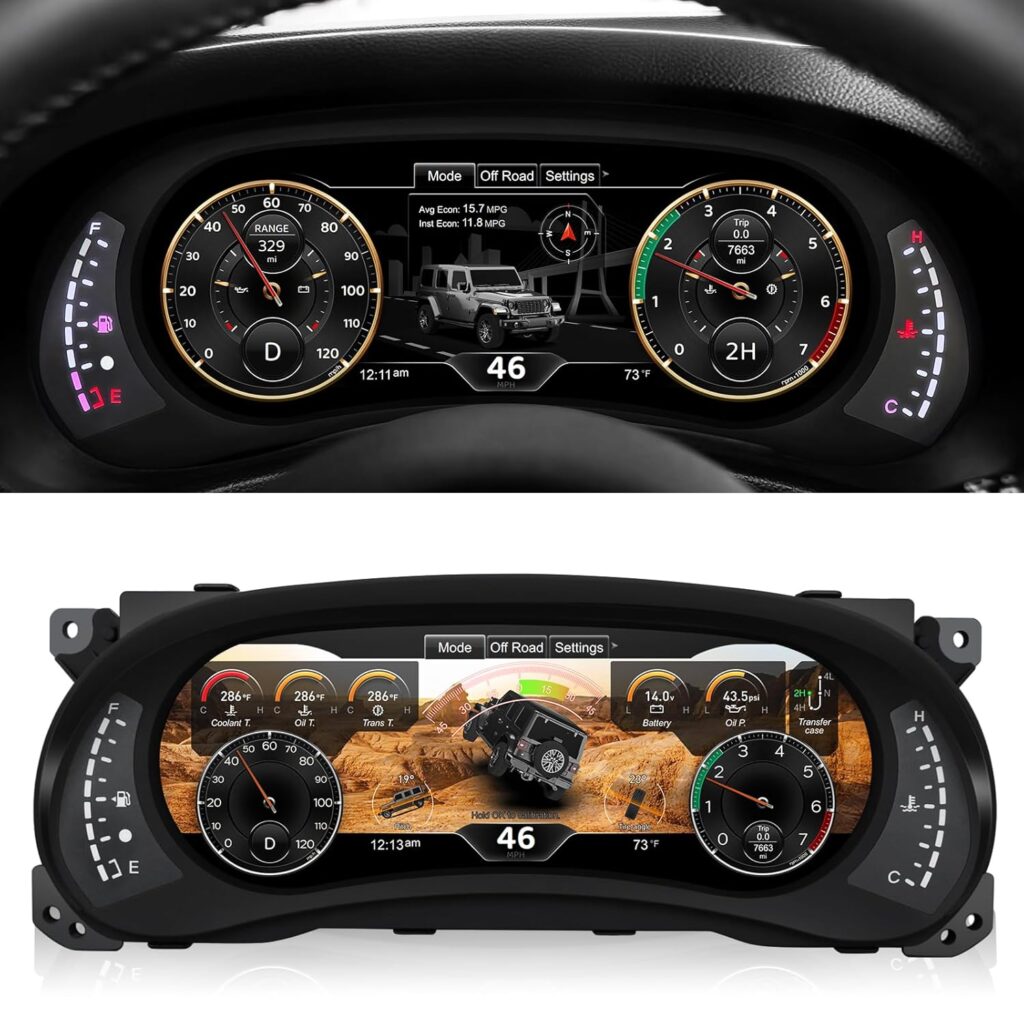
Modern Jeep models like the JL and Gladiator have embraced digital instrument clusters. These offer vibrant displays with customizable layouts, giving drivers exact readouts for speed, fuel, tire pressure, and off-road angles. For those who love tech and precision, the digital cluster feels like a game changer.
- Pros: Customizable display, real-time data, modern interface.
- Cons: Costly to replace, dependent on electronics, less “classic Jeep” feel.
Jake ended up choosing a digital upgrade — and while it cost more than expected, he loved the ability to monitor detailed engine metrics and trip data with pinpoint accuracy. Whether he was climbing muddy inclines or cruising the highway, the precision felt worth every penny.
Cost Comparison: What to Expect
| Type | Average Cost (USD) | Installation Time | Best For |
|---|---|---|---|
| Analog Cluster | $300–$600 | 1–2 Hours | Classic Jeep Owners & Off-Roaders |
| Digital Cluster | $800–$1,500+ | 2–4 Hours (with calibration) | Tech Enthusiasts & Daily Drivers |
Final Thoughts
For Jeep purists, the analog cluster delivers nostalgic charm and off-road dependability. But for those craving modern convenience, digital clusters offer customization and precision that redefine how you experience your Wrangler. Your decision ultimately depends on whether you want to feel connected to tradition — or to technology.
Summary
Analog clusters are tough, simple, and dependable, ideal for hardcore trail riders. Digital clusters, on the other hand, provide detailed data and customization for modern driving comfort. The best choice depends on your driving style and how much you value precision versus simplicity.